

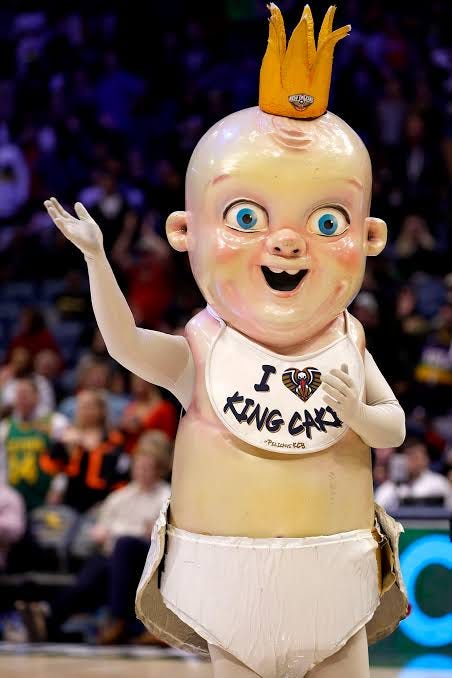
They say a picture speaks a thousand words, but I have to say the discovery of the King Cake Baby— representing the New Orleans Pelicans basketball team— rendered me speechless. I am still not sure whether the top half or the bottom half of this monstrosity is more neurologically damaging.
With the NFL back in London this past weekend, mascots, merchandise, and shameless capitalist branding were in full swing around the Tottenham Hotspur Stadium. I suppose at the very least it brought a bit of cheer to the place. It also got me thinking about what a mascot actually is, who first came up with the idea, and where they even came from.
Well, this is where the dog fits into our story. Handsome Dan, to be precise. The first official mascot of Yale University, circa 1892. Not a human dressed under a polyfoam head, but a real-life bulldog bought by Yale student Andrew Barbery Graves. Widely considered to be the first official sports mascot.
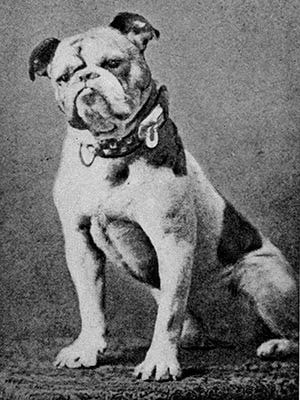
The story goes that Handsome Dan would follow his master everywhere around campus, including sporting events. So it was only natural that, with his good looks, charming personality, and love of baseball and (American) football, the masses would take him under their wing, rally around him, and adopt him as their official mascot. Even when Andrew Barbery Graves left for England, Handsome Dan remained, seemingly always at ease with the Yale student body, happy to be paraded across the pitch and barking ferociously on cue whenever arch rivals “Harvard” were mentioned. A newspaper even reported that:
“He was a big white bulldog, with one of the greatest faces a dog of that breed ever carried”.
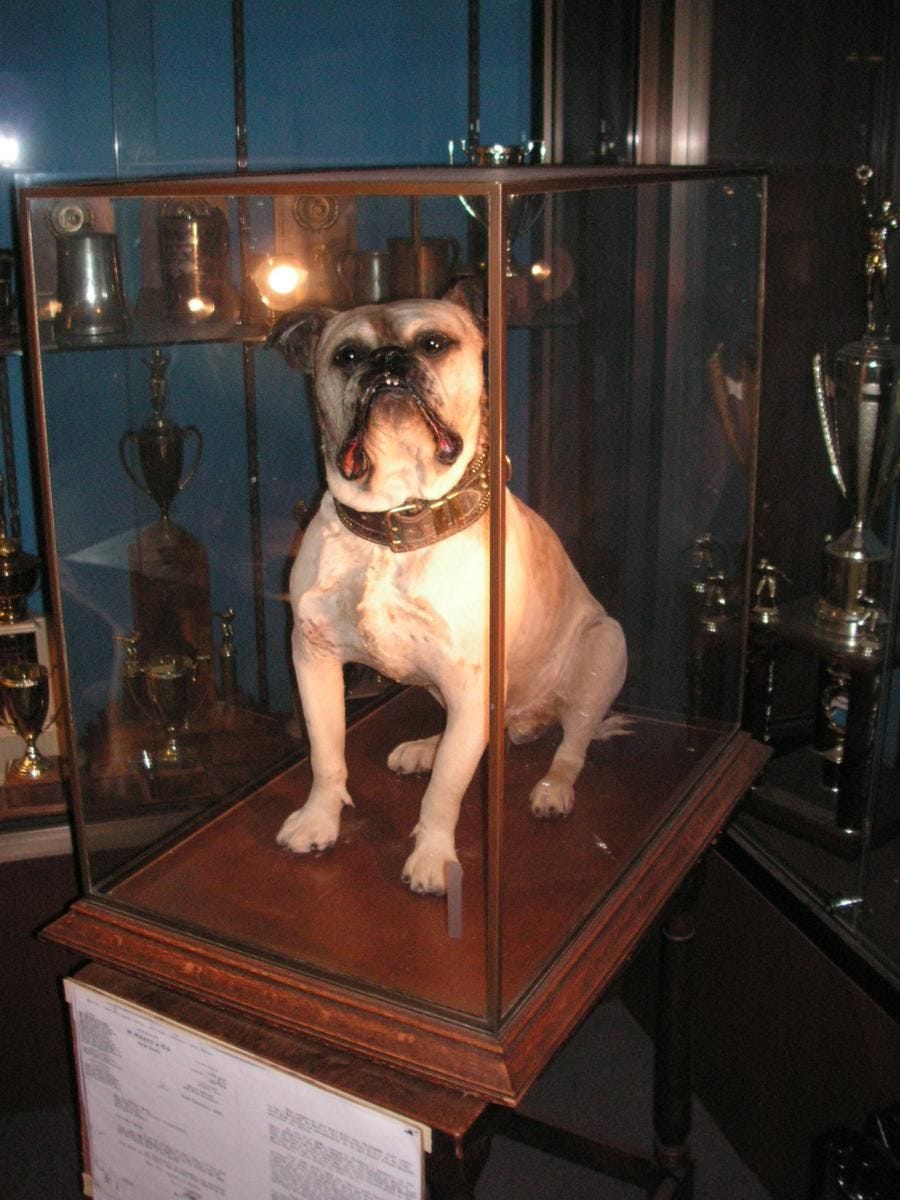
Note the use of “dog of that breed”. The writer of said statement was clearly hedging their bets against a backlash from the Golden Retriever, Husky, and Poodle lovers. Hey, each to their own, right? To say that Handsome Dan fit his name is no exaggeration. He went on to win first prize at the Westminster Dog Show in New York and at least thirty other first prize ribbons in the United States and Canada. After Handsome Dan retired in 1897 and moved across the Atlantic to be with his original master, he died in 1898. Not content to “let handsome dogs lie”, his dashing, lifeless corpse was stuffed and taxidermied for eternity and put on display at the Yale Peabody Museum.
The official Yale mascot slot remained empty for decades after. I can only imagine all the ‘fugly’ English Bulldogs not cutting the mustard when it came to replacing the much-loved canine. Yale remained Danless, and therefore stuck in perpetual ugliness, until 1933, when Handsome Dan II was initiated into the hearts of Yalies. It must have been a big name to do justice, and I can only imagine the charisma and Adonis-like looks of the subsequent addition to the HD dynasty. Few names carry such weight; it would have been like looking for the next James Bond.
The tradition continued from that year forward and into the modern day without further vacancies. Much like any royal dynasty, papacy, or, more frequently, British Prime Ministers. Through my research, I noted many of the dogs were retired from old age, or due to unfortunate incidents such as broken bones or organ failures. I did also notice a slightly darker period where HD III, VII and VIII were retired due to “emotional instability”; it seems the pressures of fame are not reserved only for us humans. The current Handsome Dan, Handsome Dan XIX to be precise, is an Olde English Bulldogge—this more athletic breed, with fewer health complications, was introduced in 2017—complete with his own social media channels (obviously). And yes, I now follow him.
But what actually is a mascot? Well, it derives from the French term ‘mascotte ’, which means lucky charm. Way before sexy dogs or baby kings, the Romans, Egyptians and the Greeks, among other ancient civilisations, contain evidence of man-made toys or talismans that were thought to protect, inspire and bring fortune from the gods. Roman legions carried standard poles into battle, topped with metal animals—most famously the golden eagle (Aquila) of Jupiter—which served as sacred protectors and rallying points for the troops. Losing the standard in battle brought severe dishonour. The 2004 Athens Olympic mascots (Athena and Phevos) were directly inspired by ancient Greek terracotta bell-shaped dolls (daidala) from the 7th century BC, which acted as religious talismans and children's toys.
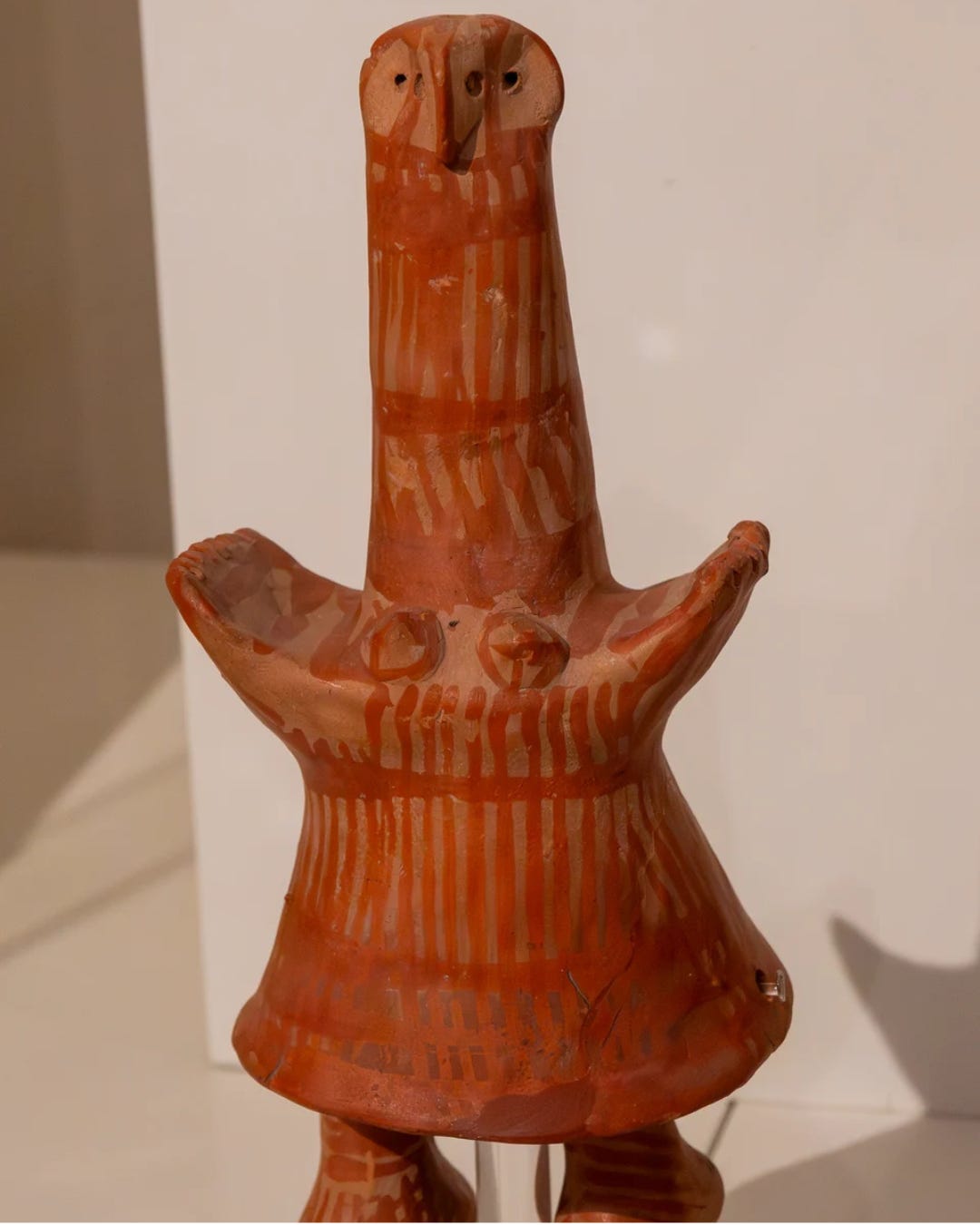
So we’ve come a long way to arriving at today’s cartoonish depictions. But at their best, mascots do give an insight into a club’s history and identity. The Seagulls, the Robins, the Tigers are pretty self-explanatory, but a high school basketball team out of Illinois called the Hoopstone Cornjerkers? “Cornjerker" refers to a historical manual labourer who hand-harvested sweet corn before modern machinery existed. The Tykes? Adopted by Barnsley FC, the Old Norse word tika, originally meant a female dog or mongrel. Over the centuries, it evolved to describe a mischievous boy or urchin, and in modern times, calling someone a “tyke” is a general term for a Yorkshire local, embodying a tough, resilient, and hard-working character.
Or what about the ‘Everton Toffee lady’ who can be found giving out sweets to fans on match day? The tradition stems from the 18th century, when Molly Bushell sold sore-throat sweets from her shop near Everton Village, which gave the club its famous "Toffees" nickname. But I have to say one of the weirdest ones that I have come across in the U.K. has to be the now-retired ‘boiler man’ of West Bromwich Albion.
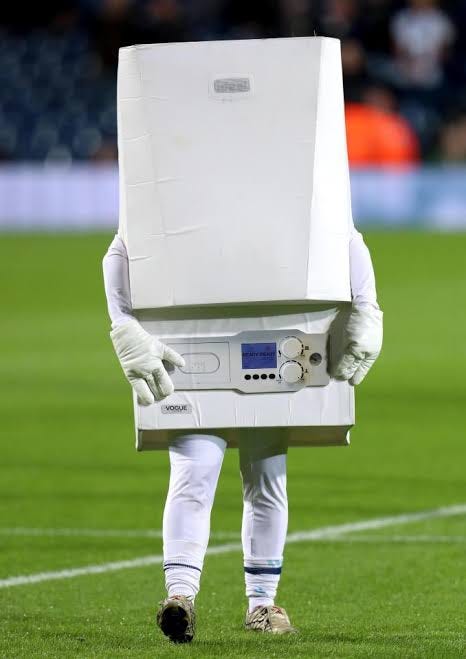
The Boiler Man—also nicknamed Colin the Combi—was a cult mascot introduced in 2018 due to a sponsorship between the club and “Ideal Boilers” (now Ideal Heating). Although Baggie Bird remained the official mascot, this partnership became a viral success with many of the fans. The Boiler Man was retired in 2024, and in my opinion, getting only six years out of your boiler isn’t a great advertisement for the longevity of Ideal Boilers’ flagship product.
So there we are, from a dog, a baby king, and to a boiler; I would love to hear some of the other weird mascots I may have missed in the comments.
Thanks for reading, and remember: It’s never just a game.