


With a new US Open champion crowned—congratulations, Alexander Zverev—and me being offered a ticket to the Laver Cup this coming weekend at the O2 in London, it got me thinking about a question I know you are all dying to know the answer to.
Why are tennis balls yellow?—Are they even technically yellow?—What colour were they before?
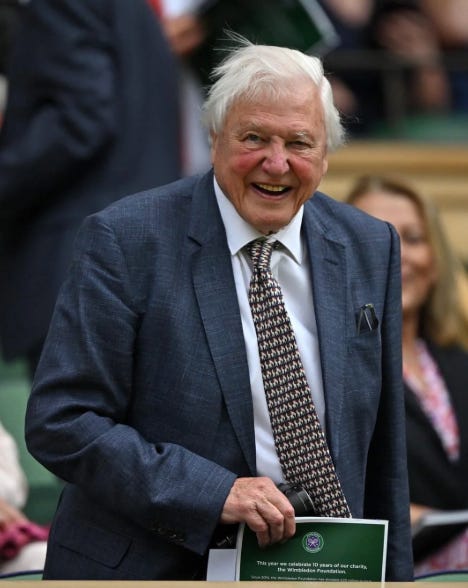
Well, you guessed it, it’s that centenarian legend again, David Attenborough. Is there anything this man can’t do? When he’s not frolicking with mountain gorillas or saving the planet with his buttery voice, he’s making broadcasting decisions that help people enjoy sport on their television sets. All of this whilst giving you the sense that he is somehow your own long-lost grandfather. Someone should give him a knighthood—ok then, is there such a thing as a double knighthood? Arise Sir Sir Attenborough, if it’s good enough for New York, it’s good enough for him.
Most people are aware that Sir (Sir) David was controller of BBC 2 from 1965-1969, where, apart from commissioning Monty Python’s Flying Circus—Yes, inject it into my veins, David!—he also oversaw the transition to colour television. The original colour of tennis balls used professionally for around a hundred years was white, and sometimes black. It was pretty clear from the start of the colour broadcasts of the Wimbledon Championships that viewers were struggling with the white balls against the court lines and the backgrounds, leading to a push for a new colour to be found.
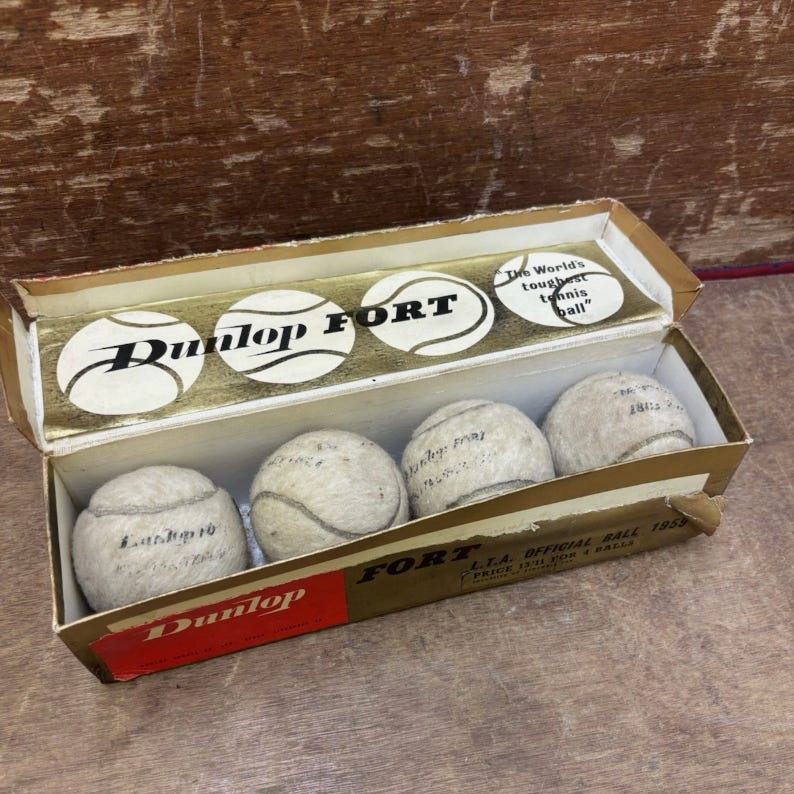
With Sir David becoming Director of programmes, overseeing both BBC One and BBC Two—all hail the king—from 1969-1973, the International Tennis Federation (ITF) was tasked with coming up with a new colour that helped viewers and better suited the new contrast that colour TV supplied. So the ITF came up with a committee—we do love a committee in this country—and settled on optic yellow. This was largely researched as the colour that was most visible.
I love the idea of the committee presenting the new tennis ball to Sir David at the BBC headquarters, on his commissioning throne, sceptre in hand, surrounded by court jesters. The head of the committee shuffling forward nervously with the prototype encased in a small box, nestled atop a silk pillow. Sir David eagerly receiving said trinket, and as he pulls the lid back, the glow illuminating his face like Indiana Jones before him—or technically after him; it is 1972 at this point, a full nine years before Raider’s is released— his trademark dulcet tones simply exclaiming in a mix of quiet awe and knowing power, “yellow”…
“No David—Optic Yellow”
“Extraordinary”—David holds it up to the shaft of sunlight beaming down from the window, and it illuminates like a newfound fruit plucked from the garden of Eden itself. The Jester begins his merry tune on the lute, and a suckling pig is brought out to be enjoyed by all. (I wasn’t present at the meeting; some of this may be imagined.)
So, what is Optic Yellow? Some people have made the argument that it is more of a green than a yellow.
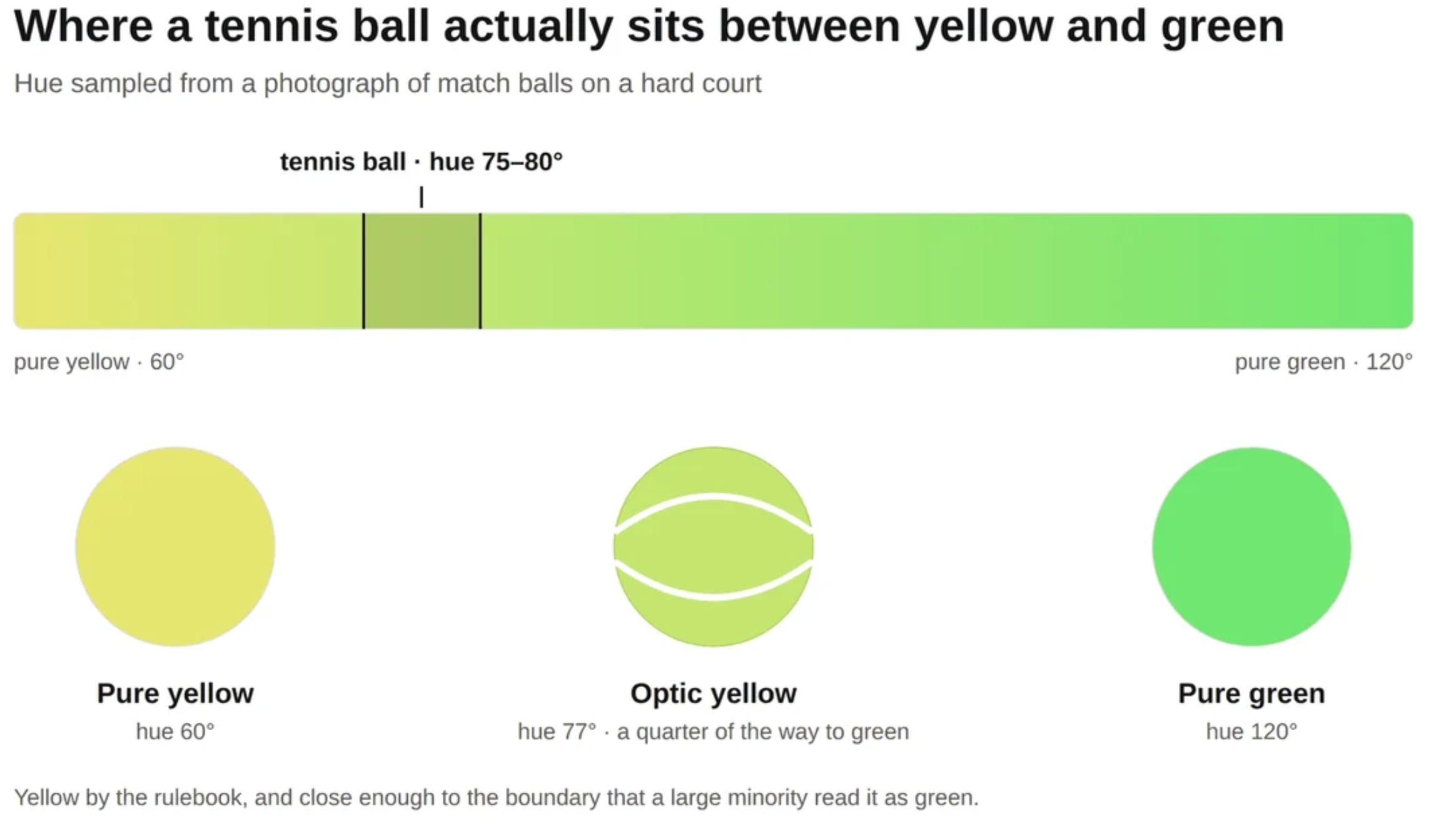
But as we can see, it is technically more yellow than green, so the next time someone tries to pull that one, just load up this article, slam the tennis ball hue card in their face, and watch as they walk away in stunned silence—perhaps never to darken your doorway again, and almost certainly never to share a first date with you again.
What I find slightly insane is that although the US Open implemented the optic yellow tennis ball in favour of the white almost immediately—the following year, in 1972—Wimbledon didn’t change from white until 1986! They cited the reasons as sticking strictly to their heritage and traditions; what is it about Wimbledon just loving whiteness? “Our balls will be white, our attire will be white, 99.9% of our ticket sales will be…”
You have to give them some credit though; they had at least moved on from using the original tennis balls that were created hundreds of years ago. A mix of leather and hair: human hair being the most prized so it didn’t rot as easily (dry wretch). It seems some traditions are indeed worth moving on from. Still, that would be one way to stop Zverev bouncing the ball so much on his second serve. Maybe reverting to the medieval balls is the rule change Ben Shelton is looking for?
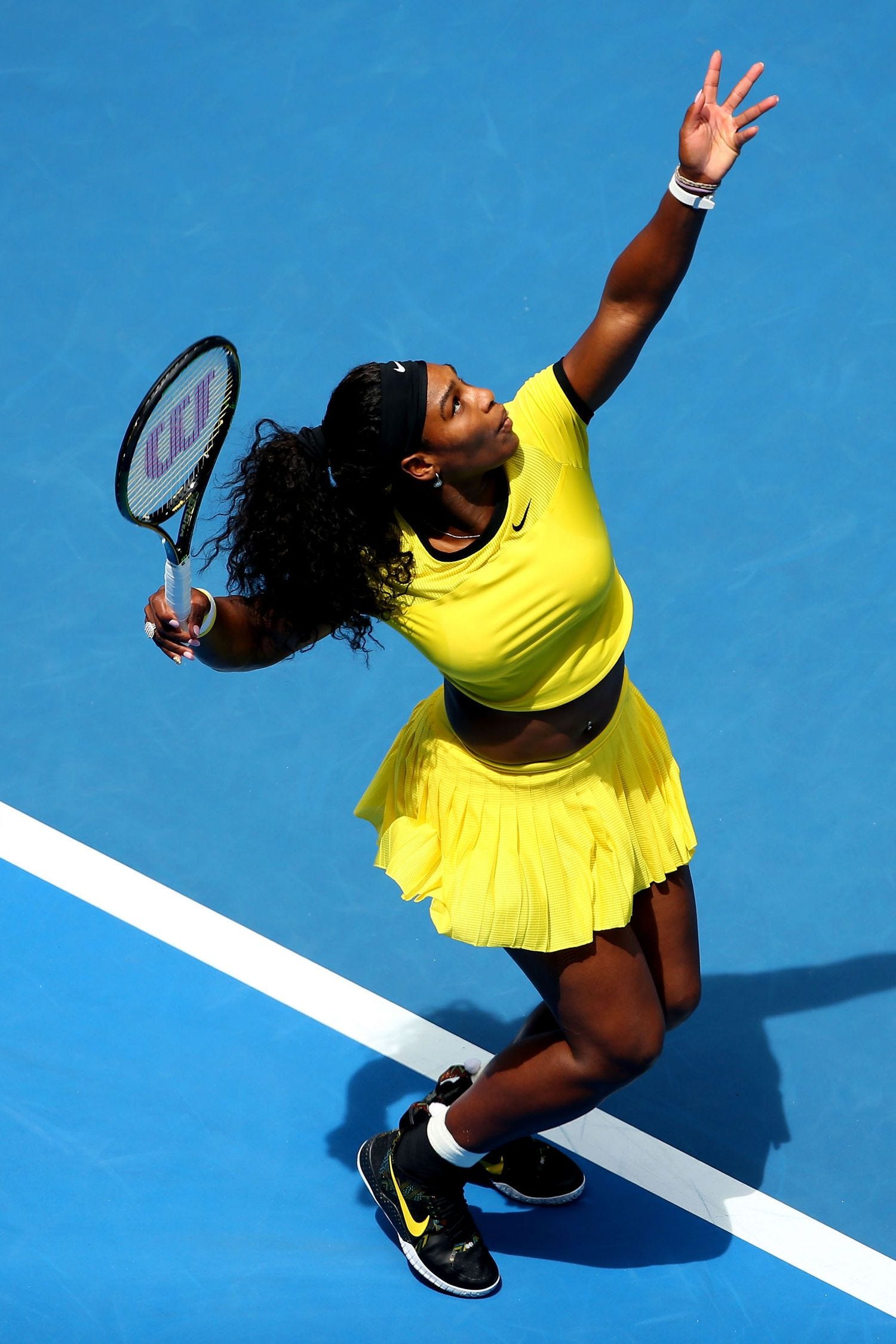
I am looking forward to the first player who wants to test the All England Club’s resolve and come dressed head to toe in optic yellow. Hey, it worked for the balls, right? Agassi famously boycotted the tournament from 1988-1990 over what he perceived as the stuffy nature of Wimbledon’s dress code, but even he didn’t have the gall to go full tennis ball. Serena rocked a complete yellow outfit at the Australian Open in 2016 and was later featured in Glamour magazine.
But That’s Not All…
Aside from Sir David’s help in getting us the tennis balls we can actually see on the telly today, he was also instrumental in bringing snooker into the 20th Century, in all its colourful glory. He championed snooker when discussions were rumbling about how best to encourage people to upgrade from their black and white TV sets. This led him to commission the TV show “Pot Black”. Working with commentator Ted Lowe, the idea was that snooker, with its beautiful green baize and all the wonderful colours, would be the perfect opportunity for people to see the benefits of ditching the old two-tone tube and embark upon their vivid journey of spectral pleasure.
It regenerated a great British sport that was facing obscurity, led to a rebirth of the game and arguably set the wheels in motion for one of the greatest decades in the sport. Not only that, but the public were finally able to see their snooker hero’s smoking in full technicolour. The vivid purple of “Silk Cut” or the regal red of “Embassy No. 1” were available for everyone to see, adults and children alike, in their natural beauty, as God intended.
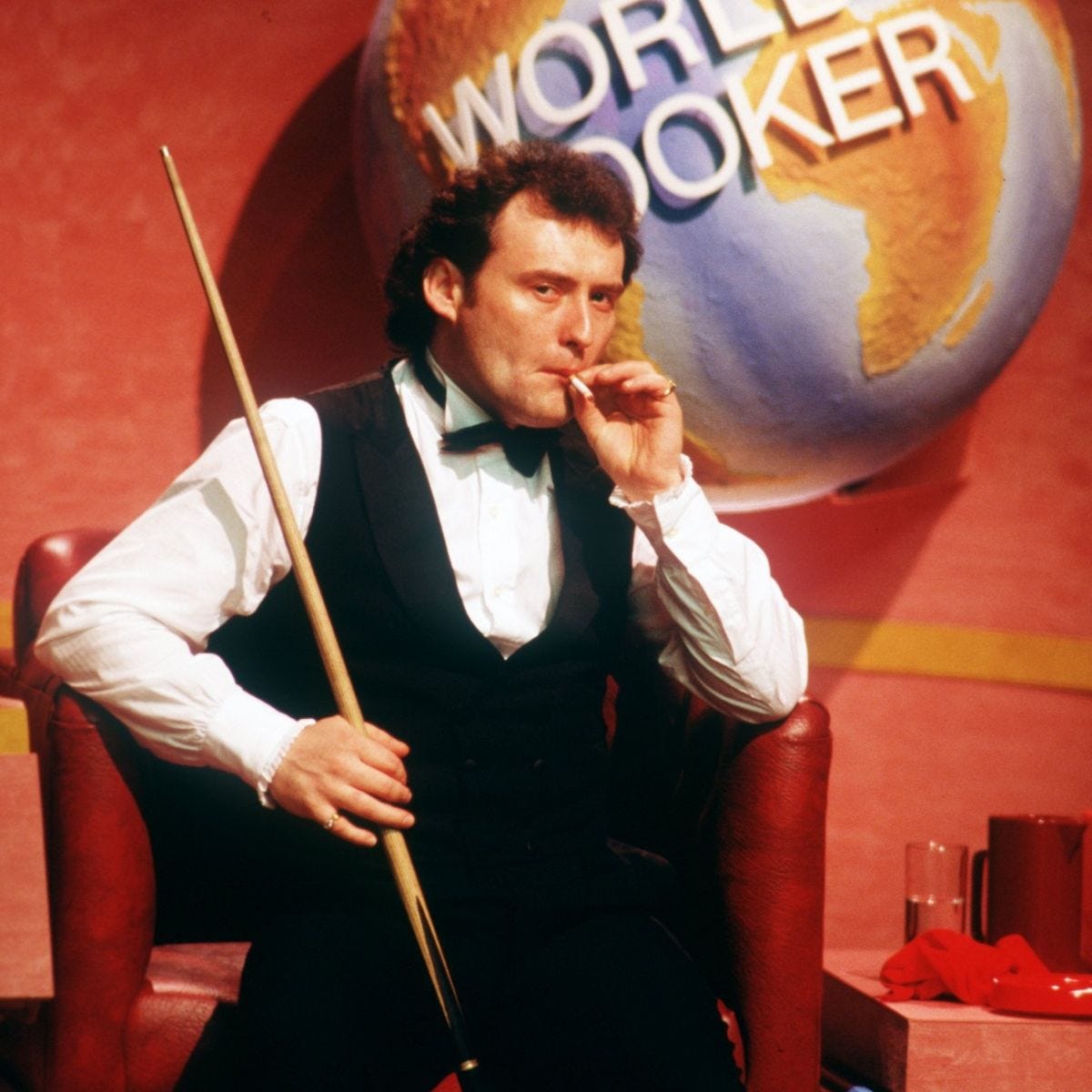
Aside from “Pot Black” being a way to show off to your next-door neighbours that you had a colour TV, it was also uniquely produced to be mindful that many would still be watching in black and white. Yes, Sir (Sir) David Attenborough wasn’t about to leave the plebs behind and let only the have’s…have. Commentator Ted Lowe also described the colours geographically on the table, especially as the red and brown would look almost identical in greyscale. This led him to utter one of his most famous quotes: “For those of you watching in black and white, the pink is next to the green”.
Thanks for reading. Please subscribe to help me continue to grow.
And remember: It’s never just a game.
I'm hovering close to disliking Attenborough with all these achievements. Great stories though :)