

I hope you've read my short article on the Humanoid Games. If not, please feel free to check it out here.
Even though “I wasn’t having it” as a sport to replace humans, it did get those little fireworks popping in my head. I thought it would make a good start to my fortnightly publication about finding the nuggets in sports stories and exploring how we might go about using them in our own writing.
My name is Paul Davidson. I am a screenwriter who loves sports. So follow me as I wrestle with my writer brain and show you how I would break this particular story. I am going to go through the basic ingredients that I believe are fundamental when starting out, and then show you how to put them together into a logline that is going to form the foundation of your story.
Disclaimer: This is an insight into my own process, my personal way of working: the questions that I ask of myself and of the material, and the decisions that we could take, we might avoid, and why. There are millions of ways that this may or may not deserve to be a Movie, TV Show or Book. This is simply how I would do it…
A good logline takes all those little fireworks in your head and distils them down into a punchy hook of one or two sentences, highlighting the core conflict that allows the reader to start getting little fireworks popping off in their own head. It is often the difference between a reader picking up a script and giving it a chance, or it remaining in their inbox for all eternity (or until they archive, in which case it is gone forever).
In my opinion John Yorke is one of the leading figures in understanding storytelling. When taking a workshop with him many years ago, he divulged to me the best ingredients for a logline, and thus a way of understanding whether or not you have a story—not an idea, not a premise, a story—they are:
Protagonist + Action/Inciting incident + Antagonist + Goal + Stakes.
The who, what and why?
Asking the right questions and doing the hard yards on each of these components early will put you in a much better position when you face the infamous blank page. Before you see that cursor blinking at you and calling you a fraud, you would do well to have an idea of each of these; it will save you a lot of time later, trust me.
But firstly…
Thought should always be given to what GENRE it is going to be. What is the sandbox that we are playing in, the universe that we are exploring? This is a thread about sports stories, but there are sports dramas, sports biopics, sports romances. Understanding the genre with which you are going to tell your story acts as the frame you begin painting your picture in.
As a side note, I also think this is the first step to understanding a writer’s ‘voice’. That elusive and often frustrating term that we as writers hear all the time. Choosing what way, or specifically choosing in which genre, you are going to tell the story sets up the prism through which everything else must go. This, in turn, is already telling the reader something about the way in which you see the world.
Personally, I like this idea as a sports comedy. Considering most of the people who are talking about the ‘Humanoid Games’ online were sharing it for the ‘entertainment’ and ‘Lol’ factor, it would be quite difficult—not impossible—to stir up the same kind of catharsis you may get from, say, “Chariots of Fire” or “Rocky”. The obscure and novel nature of this ‘sport’ could definitely lend itself to a “Dodgeball” or “Kingpin” type comedy with larger-than-life characters, but I do think tonally we could be dealing with some themes that may allow for more drama and heart than the out-and-out farcical comedy of some of these classics.
Who?
Who will be the vehicle that drives this story? Straight off the bat, I’m leaning toward this surrounding adults. The credibility of a kids’ film where someone so young could realistically build and compete at such a high level might be a bit far-fetched—yes, I remember “Robot Wars” and the darling children who competed—but these robots are going to need to be “Sir Killalot” on steroids. Perhaps there is a blend we can find; I don’t hate something in the mould of “The Karate Kid” with a mentor-type figure, but I am not sure robotics is going to give us the same physical journey. Let’s put a pin in that for now; nothing is off the table, and we already have a genre to explore.
Now I was thinking about it as an underdog story: in a world of advanced technology, eye-watering budgets and corporate investment, there is already a lot of potential for an underdog to emerge. I also get excited about the traditionally male-dominated culture of ‘Tech Bros’. Could we explore a female dynamic within a very heavily male-dominated workplace?
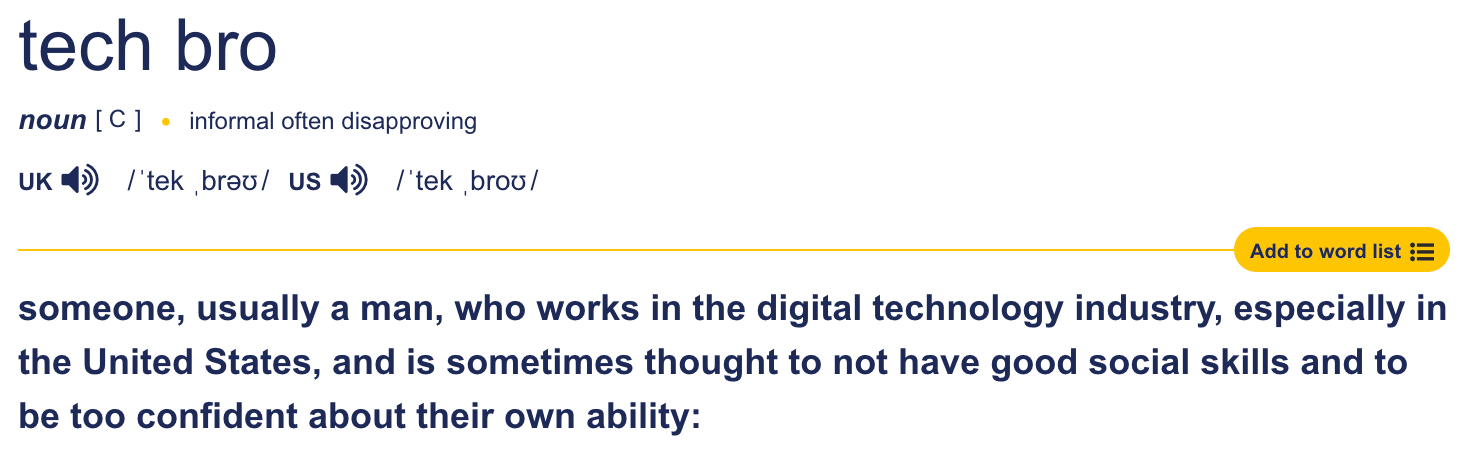
OK, now I’m starting to think about a highly skilled and highly capable female engineer, working for a leading robotics company (PROTAGONIST). She needs to have a specific skill set because of the nature of robotics and science, etc. This is not likely going to be one of those ‘fish out of water’ or ‘transferable skill’ stories in the vein of “Happy Gilmour” or “The Dink”. So we have a highly skilled female technician who, being a woman, could easily have some power dynamics at play with colleagues or superiors. The world of ‘Tech Bros’ and toxic masculinity is also very fertile for comedy (ANTAGONIST). Maybe she is one of the leading technicians; in fact, it is her genius that has managed to allow the company to be one of the market leaders in this technology. This is clearly making her some jealous enemies along the way.
Sure, she is brilliant, but what is she missing in her life? What is her flaw? In any good movie, more often than not, the protagonist is the one who goes on the greatest journey. Sometimes literally, but almost always internally. They start one way and then, through the process of this story, they will end up somehow changed, usually for better, but sometimes for worse; Michael Corleone of the Godfather trilogy is often the most cited example of a negative character arc.
What if she is a workaholic who needs to find something else in her life? Not sure. Maybe she is weak and must learn to be strong? Getting warmer, but I don’t love the ‘weak woman’ angle. Perhaps she is individualistic and learns to be a team player? Hmmm… Maybe she is a control freak and is going to need to learn to rely on others? I quite like this last one; it is a tried-and-tested flaw in sports movies for obvious reasons, particularly when dealing with team sports, but we aren’t trying to reinvent the wheel here. I believe that following some clear genre tropes against the backdrop of a never-before-seen ‘sport’ could be enough to give us a solid jumping-off point.
“Just when I thought I was out, they pull me back in!” - Michael Corleone in The Godfather Part III.
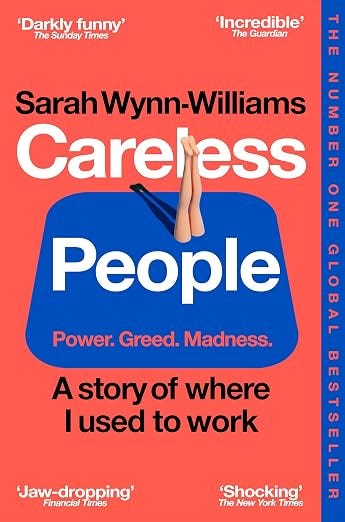
So we have our protagonist, a brilliant but self-centred female robotics engineer at the pinnacle of her career…needs to be disrupted in some way… There is a world where she is a whistleblower. I recently read “Careless People” by Sarah Wynn-Williams, which was all about the terrifying inner workings of the Facebook hierarchy. Her memoir recounts her constant moral dilemma of working for a rapidly expanding tech company and the less-than-transparent objectives of the owners. Could work here.
The tech company that she works for is creating humanoid robots, attempting to compete in the upcoming ‘Humanoid Games’, but when our hero discovers that it is actually a smokescreen for a much more sinister usage—weaponisation, selling to the highest bidder—she blows the whistle and is ostracised from the company. Even better, she is publicly and professionally ruined, black listed from any role within the industry. And there’s our INCITING INCIDENT.
What?
So I do still like this for a comedy: a female employee who tries to do the right thing and is shamed and banished by her predominantly male colleagues and superiors. Hilarious, right? But seriously, I believe there must be an element of tragedy in comedy, but there must also be comedy in comedy…
Remember earlier we put a pin in whether or not we were looking at involving kids? Well, how about this to get some fish-out-of-water vibes going authentically into the story?
Sued by her previous company for breaching her NDA and robbed of her own research by the corporate bigwigs, our hero is forced to go into teaching. It is the only profession where she can still live out her passion for science. But the Ivy League, red-brick schools won’t take her because of the politics surrounding her departure—and no doubt some of the high-profile benefactors being connected to the nefarious world of big tech—so she is forced into remedial-style education in an underprivileged part of town. Not little kids, but senior high school kids, kids who are more realistically capable but also have no aspirations of college. Kids that have been forgotten about. Sharon Stone in “Dangerous Minds” style kids (white saviour syndrome aside), or Whoopi Goldberg in “Sister Act 2” style kids. Our protagonist manages to connect with some of these children using her considerable talents in robotics, bringing her own material from home; she watches as these kids come alive, hidden talents are uncovered, newfound skills emerge, and a love of learning is rekindled in this practical way of teaching.

So she creates an after-school science club to help boost the grades of some of the more challenging kids, helping to keep some of them off the streets, away from negative relationships and improve social issues surrounding their private lives. But what she also begins to feel is a connection to these kids, more than she ever felt in her old job; she is beginning to learn the skills to build a team. Then she has the idea, this crazy idea, that maybe somehow, she can get back at her old employees—and win some money for the school in the process—by entering into the ‘Humanoid Games’. So, with the help of the after-school club and her considerable skill in the field, they set about building a team of various robots, surrounding her own groundbreaking research.
Money and access to technology are going to be some of the obvious issues in the credibility of building these advanced systems. But where there are obstacles, there is conflict; where there is conflict, there is drama, and where there is drama, there can always be comedy. Is there a grant the school must compete for, a sizeable donation from a charity of sorts? Maybe our hero secures a private investment from somewhere. What if there is a charity donation, and she must fight for this to be invested heavily in the science area, somewhat selfishly? (FLAW compounding) The whole school needs support, sports, facilities, not to mention Teacher salaries, but she manages somehow to get the powers that be to invest in her advanced robotics programme. Maybe promising them a return on their investment (starting to get into STAKES territory now)? What if the school was facing closure, money is already tight, and the last throw of the dice could be to create a science programme that would force them to reassess the closure? Suddenly the STAKES just got a lot higher.
Then, when the money inevitably starts to run out, instead of giving up, the students take matters into their own hands. Images of the kids illegally playing online poker, gambling with crypto or winning E-sports events instantly spring to mind. This could be a great way of our hero learning to rely on others; the kids are teaching her what it means to really be a team player. In this way, she can take this ragtag bunch of kids, using the school’s basic funding programme and the PR that this creates, to secure private funding and enter into the games, competing directly against her old company (GOAL). It almost has a “School of Rock” journey. I can already imagine the fun and games of malfunctions, training the robots, and the traditional sports montage subverted in a comedic way using humanoids.

It’s “School of Rock”… with robots.
Why?
I do think something is still missing… A tangible way that our hero can get back at her old employers for her wrongful dismissal. Could there be a way that, during the events, when her team of misfit youngsters begin to show up and win, the corporate machines introduce a level of foul play? This somehow reveals the hidden capabilities and the dangers of the ex-employer humanoids and how they have been programmed to also possess military capabilities. The win-at-all-costs mentality of the corporate team showcases the technology for what it has truly been designed for, terrifying the audience and judges and exonerating our hero publicly. There is also a world where an unexpected ‘final battle’ takes place. Our hero and her team of robots must incapacitate the rogue robots and stop them from turning on their human creators—It’s still a comedy, I swear.
Thwarting our hero’s previous employer, the corporate greed and the gambling with people’s lives—very current in light of the AI debate—can also help give us more in terms of STAKES. What this also gives us is the beginning of some themes we might want to dig into at a later stage.
Quite often, THEME is something that is discovered when writing, but I really like to try and think of it as early as possible. Some of the themes surrounding our story could be ‘access to education’, ‘the dangers of corporate greed’, ‘standing up for what you believe in’. Having some themes to explore early will help position every single story beat, character motivation and line of dialogue into a more cohesive story. But for now I think we have enough ingredients to have a bash at constructing our logline.
PROTAGONIST- A highly skilled but egocentric robotics engineer.
ACTION/ INCITING INCIDENT- Fired from her job and blacklisted for whistleblowing
ANTAGONIST - Team of ex-employers
GOAL - Competing in the Humanoid Games
STAKES - To save the school and her research.
Let’s put it all together:
A highly skilled but egocentric robotics engineer is fired from her company and blacklisted for exposing their nefarious secret agenda. Forced to take a job at a remedial high school, she creates a ragtag team of students to compete against her ex-employers at the humanoid games to redeem her reputation and save the school from closure.
It’s not bad for a first go, maybe not perfect, perhaps even a little wordy, but it is definitely something that makes me believe there is a story in there somewhere.
This is, of course, a starting point; the next stages would be starting to break the story structurally, looking for the set pieces that would make it interesting to watch, funny, moving, etc. Not to mention the most important thing: a central dramatic question, a core theme; in other words, what is it really about? Some of this terminology I will explore in future deep dives.
So would you watch this movie? How might you do it differently? Do you think it would be better served as a TV Show? I would love any thoughts on things I may have missed, discussions on what people might do differently, hell, even some fun imaginary casting ideas. Let me know in the comments.
Thanks for reading. Please feel free to share and subscribe to help me grow the platform. It really helps in these early stages to know I’m not talking to myself.